
Most of the information patients find about stem cell therapy focuses on the treatment day itself. What happens afterward gets far less attention, and that leaves many people unsure whether what they are experiencing in the weeks that follow is normal, concerning, or simply too early to judge.
This guide walks through the first 90 days after a mesenchymal stem cell treatment in general terms: what the early days often feel like, how activity and follow-up are typically handled, what “progress” realistically looks like, and which symptoms should be reported right away. It is educational, not a substitute for the instructions your treating physician gives you. Stem cell therapy for orthopedic and other conditions remains investigational, results vary from person to person, and these uses are not FDA-approved.
Rocky Point Stem Cell Therapy in Puerto Peñasco (Rocky Point), Mexico, a short drive from the U.S. border, offers mesenchymal stem cell treatments including IV options and treatments for joints and medical conditions. The clinic provides free medical phone consultations, patient questionnaires, pre- and post-care guidance, custom follow-ups, and travel assistance, which is why the aftercare period is something patients can plan for in advance rather than figure out alone.

Why the First 90 Days Matter
Ninety days is a practical window for a simple reason: it is long enough for early soreness to resolve, for any gradual change to become noticeable, and for a patient and physician to have a meaningful conversation about whether the treatment is doing anything. It is also short enough that the patient still remembers what their baseline felt like.
That last point is important. The most common mistake patients make after any regenerative treatment is judging it day by day. Mesenchymal stem cells are being studied for their potential to influence inflammation and tissue-repair signaling, and researchers describe those processes as gradual rather than immediate. A treatment that does nothing on day three has not failed, and a good day on day ten is not proof that it worked. The honest evaluation happens over weeks, against a baseline you wrote down before you started.
If you have not yet had treatment, the clinic’s guides on preparing for your stem cell therapy and its pre- and post-care instructions are the place to start. What follows picks up where those leave off.
The First 48 Hours: Immediate Aftercare
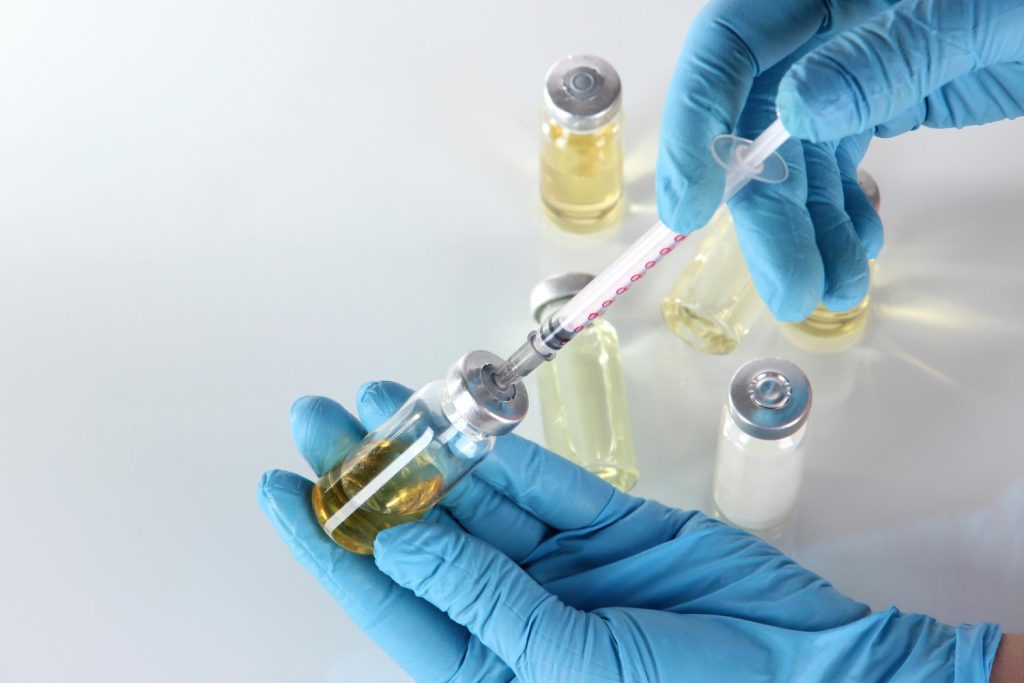
The first two days are about rest, hydration, and paying attention. What you notice depends largely on how the treatment was delivered. As the clinic’s article on IV stem cell therapy versus local injection explains, the two methods involve different aftercare considerations.
After an IV Treatment
Patients may notice mild bruising or tenderness at the IV site, fatigue, or a general feeling of being “off” for a day or so. Some report nothing at all. Drinking water, eating normally, and avoiding alcohol for the period your physician specifies are the usual recommendations.
After a Local Joint or Spine-Area Injection
Soreness, swelling, or stiffness in the treated area is common and can last several days. A temporary flare of the original pain is also possible and does not, by itself, indicate a problem. Icing, gentle movement, and avoiding strain on the treated joint are typical instructions. Your physician will tell you which over-the-counter medications are acceptable during this window, since some anti-inflammatory drugs may be restricted for a period after treatment.
Traveling Home
Most patients visiting Rocky Point drive back across the border, and the clinic’s travel assistance can help with timing. Plan for a comfortable trip: stop to stretch on longer drives, keep water with you, and have your written aftercare instructions and the clinic’s contact information within reach before you leave.
Week One: Rest, Activity, and Symptom Notes
The first week is usually the most restrictive. Follow the activity limits you were given rather than a general rule from the internet, because the right level of rest depends on which area was treated and how.
Activity
Light walking is generally encouraged unless you were told otherwise. High-impact exercise, heavy lifting, and strenuous use of a treated joint are typically off the table during this period. If you are unsure whether a specific activity is acceptable, ask before doing it rather than after.
Medications
Do not stop or change any prescribed medication on your own. If a medication was paused before treatment, restart it only on the schedule your physician gave you. If you have questions about an interaction, contact the clinic or your home physician.
Start a Simple Log
This is the single most useful thing you can do in week one. Once a day, write down a pain score, what you were able to do, how you slept, and anything unusual. It takes a minute, and by day 90 it becomes the only reliable record of whether anything actually changed.
Weeks Two Through Four: Establishing a Baseline

By the second week, post-procedure soreness has usually settled, and patients tend to feel roughly the way they did before treatment. This is the point where many people become discouraged, and it is worth stating plainly: feeling “the same” at week three is an expected part of the timeline, not a verdict.
Some patients do report earlier changes in stiffness or comfort. Others notice nothing until later, and some do not notice a meaningful change at all. All three are documented experiences with investigational regenerative treatments, and none of them can be predicted in advance for an individual.
Use this period to track function rather than just pain. For a knee, that might be how many stairs you can climb before discomfort or how far you can walk. For a shoulder, it might be whether you can reach a high shelf. For patients who had IV treatment for broader wellness or inflammation-related concerns, it might be energy through the afternoon or the number of days per week a symptom shows up. Specific, measurable notes are far more useful to your physician than “a bit better.”
Nutrition also matters during this stretch. The clinic’s guide to nutrition before and after stem cell therapy covers the general principles; the short version is that a whole-food diet with adequate protein and limited processed food and alcohol supports normal recovery, whatever else is happening.
Weeks Five Through Eight: Gradual Activity and Follow-Up

This is typically when activity restrictions begin to ease and structured follow-up becomes more meaningful. Rocky Point Stem Cell Therapy builds custom follow-ups into its patient process, and this is the window where a check-in is most useful because there is finally something to compare against your baseline.
Returning to Exercise
Reintroduce activity gradually and on your physician’s timeline. A common approach for joint patients is to increase low-impact work first (walking, cycling, pool work) before returning to running, jumping, or heavy loading. Pushing a treated joint too hard too early can set back recovery regardless of what the treatment itself is doing.
Physical Therapy
If you were already working with a physical therapist, share your treatment details and aftercare instructions with them. Many patients find that continuing rehabilitation during this period helps them regain range of motion and strength, which are goals of their own whether or not the regenerative treatment contributes.
What a Follow-Up Should Cover
- Your pain and function log compared with your pre-treatment baseline
- Any side effects, even minor ones that have already resolved
- Current medications and anything that changed
- Activity level and what you are cleared to add next
- Whether any additional evaluation or imaging is appropriate
Weeks Nine Through Twelve: Reviewing Progress Honestly
By the end of the third month, you and your physician have enough information for a fair conversation. Open the log and look at trends rather than individual days. Has your average pain score moved? Can you do something now that you could not do in week one? Are you using less of a medication your physician has been tracking?
If the answer is yes, that is encouraging, with the caveat that improvement can have several contributors, including rest, rehabilitation, nutrition, and the natural course of a condition. If the answer is no, that is important information too. It does not mean you did something wrong, and it should shape the next decision rather than lead to a reflexive second treatment. Any discussion of further treatment should start with a medical review of why the first course did or did not produce a change.
Whatever the outcome, keep your regular physician informed. Stem cell therapy is not a replacement for ongoing care of a chronic condition, and your doctor at home should know what you received, when, and how you responded.
Warning Signs to Report at Any Point
Most of what patients experience in the first 90 days is mild and self-limiting. A small number of symptoms should be reported to the clinic or a local physician promptly rather than waited out:
- Fever, chills, or feeling generally unwell in the days after treatment
- Redness, warmth, spreading swelling, or drainage at an injection or IV site
- Pain in a treated joint that is getting worse after the first week instead of better
- Shortness of breath, chest pain, or a rash and swelling that suggest an allergic-type reaction
- New numbness, weakness, or loss of function
These are not common, but they are the reason a responsible clinic gives you a way to reach them after you go home. If a symptom feels like an emergency, treat it as one and seek local care first.
How Rocky Point Stem Cell Therapy Supports Patients After Treatment
The aftercare period goes more smoothly when the plan exists before treatment day. Rocky Point Stem Cell Therapy starts with a free medical phone consultation and a patient questionnaire, provides written pre- and post-care guidance, and arranges custom follow-ups so patients returning to the U.S. have a defined point of contact. Travel assistance covers the logistics of getting to and from Puerto Peñasco.
If you are still deciding, the clinic’s stem cell FAQs and its article on stem cell therapy safety in Mexico address the questions most patients ask first. When you are ready to talk through your situation, you can schedule a consultation or reach the team through the contact page.
